
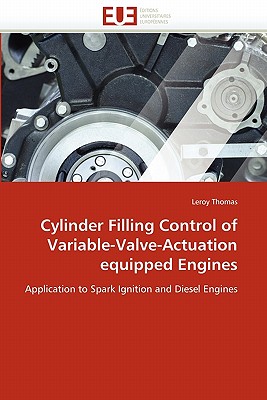
Cylinder filling control of variable-valve-actuation equipped engines
| AUTHOR | Thomas-L |
| PUBLISHER | Omniscriptum (02/28/2018) |
| PRODUCT TYPE | Paperback (Paperback) |
Description
The production of torque and pollutants of Variable Valve Actuation equipped internal combustion engines found in the automotive industry (both Diesel and gasoline engines) is studied. Variable Valve Actuation (VVA) is a technology which has been introduced to optimize engine efficiency at steady-states covering a wide range of operating conditions. In more details, the outcome of the internal combustion engine (torque and pollutant) depends on the cylinder filling at each stroke which, itself, depends on the VVA positions and the engine intake manifold conditions. These two subsystems have inconsistent response times which results in efficiency losses during transient operations. In this manuscript, a remedy for this issue which takes the form of coordination loops of low-level controllers is proposed. This coordination uses a cylinder filling model, designed in the thesis. Experimental results prove that torque production and pollutant emissions can be improved.
Show More
Product Format
Product Details
ISBN-13:
9786131545207
ISBN-10:
6131545200
Binding:
Paperback or Softback (Trade Paperback (Us))
Content Language:
French
More Product Details
Page Count:
172
Carton Quantity:
46
Product Dimensions:
6.00 x 0.40 x 9.00 inches
Weight:
0.57 pound(s)
Country of Origin:
FR
Subject Information
BISAC Categories
Technology & Engineering | Automotive
Technology & Engineering | General
Descriptions, Reviews, Etc.
publisher marketing
The production of torque and pollutants of Variable Valve Actuation equipped internal combustion engines found in the automotive industry (both Diesel and gasoline engines) is studied. Variable Valve Actuation (VVA) is a technology which has been introduced to optimize engine efficiency at steady-states covering a wide range of operating conditions. In more details, the outcome of the internal combustion engine (torque and pollutant) depends on the cylinder filling at each stroke which, itself, depends on the VVA positions and the engine intake manifold conditions. These two subsystems have inconsistent response times which results in efficiency losses during transient operations. In this manuscript, a remedy for this issue which takes the form of coordination loops of low-level controllers is proposed. This coordination uses a cylinder filling model, designed in the thesis. Experimental results prove that torque production and pollutant emissions can be improved.
Show More
List Price $81.00
Your Price
$80.19