
Back to Search

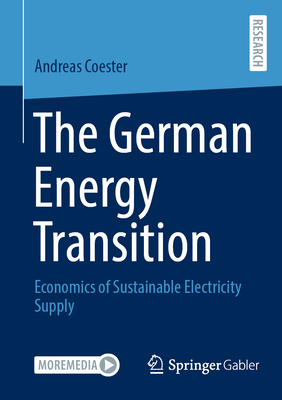
The German Energy Transition: Economics of Sustainable Electricity Supply

AUTHOR Coester, Andreas
PUBLISHER Springer Gabler (05/29/2025)
PRODUCT TYPE Paperback (Paperback)

Description
The industrial activities that our modern civilization depends upon have increased CO2 and other greenhouse gas emissions significantly. There is considerable consensus that this increase in emissions has been contributing to climate change. In order to limit global warming, a comprehensive and fast transition to lower emissions in all industrial sectors is crucial. Despite the strong increase in renewable energies capacity over the past years, there are various challenges associated with the further transition to a 100% renewable energies supply. One of the challenges is the fluctuating supply of renewable energies due to the intermitted nature of wind and sunshine. Another challenge arises from the low marginal costs of renewable energies that lead to a reduction of the electricity price, which impairs a profitable operation of both conventional and renewable energies power plants. Against this backdrop, the main question of this research is which policy scenario can ensure an economic efficient and ongoing expansion of renewable energies together with a secure level of electricity supply? The research focusses on Germany, as Germany has to find sustainable and economically feasible policy scenarios in the short-term due to its strong expansion of renewable energies and its decision to phase-out both nuclear and coal power plants.

Show More
Product Format
Product Details
ISBN-13: 9783658482633
ISBN-10: 365848263X
Binding: Paperback or Softback (Trade Paperback (Us))
Content Language: English
More Product Details
Page Count: 186
Carton Quantity: 36
Product Dimensions: 5.83 x 0.46 x 8.27 inches
Weight: 0.58 pound(s)
Feature Codes: Illustrated
Country of Origin: NL
Subject Information
BISAC Categories
Business & Economics | Industries - General
Descriptions, Reviews, Etc.
jacket back

The industrial activities that our modern civilization depends upon have increased CO2 and other greenhouse gas emissions significantly. There is considerable consensus that this increase in emissions has been contributing to climate change. In order to limit global warming, a comprehensive and fast transition to lower emissions in all industrial sectors is crucial. Despite the strong increase in renewable energies capacity over the past years, there are various challenges associated with the further transition to a 100% renewable energies supply. One of the challenges is the fluctuating supply of renewable energies due to the intermitted nature of wind and sunshine. Another challenge arises from the low marginal costs of renewable energies that lead to a reduction of the electricity price, which impairs a profitable operation of both conventional and renewable energies power plants. Against this backdrop, the main question of this research is which policy scenario can ensure an economic efficient and ongoing expansion of renewable energies together with a secure level of electricity supply? The research focusses on Germany, as Germany has to find sustainable and economically feasible policy scenarios in the short-term due to its strong expansion of renewable energies and its decision to phase-out both nuclear and coal power plants.

About the author

Dr. Andreas Coester has been researching at the Vrije University Amsterdam. In addition to working as a university lecturer at FOM-Hochschule, he is a full-time Vice President in a major German corporation.

Show More
publisher marketing
The industrial activities that our modern civilization depends upon have increased CO2 and other greenhouse gas emissions significantly. There is considerable consensus that this increase in emissions has been contributing to climate change. In order to limit global warming, a comprehensive and fast transition to lower emissions in all industrial sectors is crucial. Despite the strong increase in renewable energies capacity over the past years, there are various challenges associated with the further transition to a 100% renewable energies supply. One of the challenges is the fluctuating supply of renewable energies due to the intermitted nature of wind and sunshine. Another challenge arises from the low marginal costs of renewable energies that lead to a reduction of the electricity price, which impairs a profitable operation of both conventional and renewable energies power plants. Against this backdrop, the main question of this research is which policy scenario can ensure an economic efficient and ongoing expansion of renewable energies together with a secure level of electricity supply? The research focusses on Germany, as Germany has to find sustainable and economically feasible policy scenarios in the short-term due to its strong expansion of renewable energies and its decision to phase-out both nuclear and coal power plants.

Show More
List Price $109.99
Your Price  $108.89
Paperback