
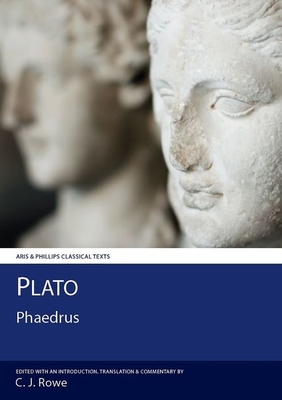
Plato: Phaedrus
| AUTHOR | Rowe, Christopher J.; Rowe, C. J. |
| PUBLISHER | Liverpool University Press (01/01/1986) |
| PRODUCT TYPE | Paperback (Paperback) |
The dating of the Phaedrus has been hotly debated: sometimes it has been counted among Plato's earliest works; sometimes with the dialogues of the 'middle' period (Phaedo, Symposium, Republic); sometimes with the late works (e.g. Sophist, Statesman). The safest and easiest hypothesis is that it stands somewhere between the latter two groups, in that it displays themes and preoccupations in common with both. Love, knowledge and the Forms, the nature and fate of the immortal soul: these are subjects familiar from the constructive middle dialogues; on the other hand, the discussion which frames Socrates' treatment of them, about the relationship between rhetoric and philosophy, about the value of writing, and about methodology, can in many respects plausibly be linked with the approach of the later and more critical dialogues. In modern times the Phaedrus has been relatively neglected; yet the rich mixture of its themes, and the consequent variations of style and tempo, make it one of the most rewarding parts of the Platonic corpus. This same variety is also the source of one of the major problems affecting our understanding of the work; is it a real unity? If so, what are the threads which hold the parts together? Greek text with facing-page
translation, commentary and notes.
The dating of the Phaedrus has been hotly debated: sometimes it has been counted among Plato's earliest works; sometimes with the dialogues of the 'middle' period (Phaedo, Symposium, Republic); sometimes with the late works (e.g. Sophist, Statesman). The safest and easiest hypothesis is that it stands somewhere between the latter two groups, in that it displays themes and preoccupations in common with both. Love, knowledge and the Forms, the nature and fate of the immortal soul: these are subjects familiar from the constructive middle dialogues; on the other hand, the discussion which frames Socrates' treatment of them, about the relationship between rhetoric and philosophy, about the value of writing, and about methodology, can in many respects plausibly be linked with the approach of the later and more critical dialogues. In modern times the Phaedrus has been relatively neglected; yet the rich mixture of its themes, and the consequent variations of style and tempo, make it one of the most rewarding parts of the Platonic corpus. This same variety is also the source of one of the major problems affecting our understanding of the work; is it a real unity? If so, what are the threads which hold the parts together? Greek text with facing-page
translation, commentary and notes.