
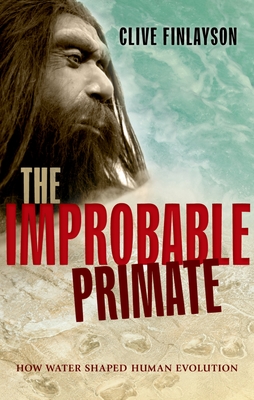
The Improbable Primate
| AUTHOR | Finlayson, Clive |
| PUBLISHER | Academic (05/06/2014) |
| PRODUCT TYPE | Hardcover (Hardcover) |
Description
In this fresh and provocative view of a seven-million-year evolutionary journey, Finlayson demonstrates the radical implications for the interpretation of fossils and technologies and shows that understanding humans within an ecological context provides insights into the emergence and spread of Homo sapiens worldwide. Finlayson argues that environmental change, particularly availability of water, played a critical role in shaping the direction of human evolution, contributing to our spread and success. He argues that our ancestors carved a niche for themselves by leaving the forest and forcing their way into a long-established community of carnivores in a tropical savannah as climate changes opened up the landscape. They took their chance at high noon, when most other predators were asleep. Adapting to this new lifestyle by shedding their hair and developing an active sweating system to keep cool, being close to fresh water was vital. As the climate dried, our ancestors, already bipedal, became taller and slimmer, more adept at travelling farther in search of water. The challenges of seeking water in a drying landscape moulded the minds and bodies of early humans, and directed their migrations and eventual settlements.
Show More
Product Format
Product Details
ISBN-13:
9780199658794
ISBN-10:
019965879X
Binding:
Hardback or Cased Book (Sewn)
Content Language:
English
More Product Details
Page Count:
232
Carton Quantity:
30
Product Dimensions:
5.70 x 0.90 x 8.60 inches
Weight:
0.83 pound(s)
Feature Codes:
Bibliography,
Index,
Dust Cover,
Price on Product,
Table of Contents,
Illustrated
Country of Origin:
IT
Subject Information
BISAC Categories
Science | Life Sciences - Evolution
Science | Historical Geography
Science | Life Sciences - Genetics & Genomics
Dewey Decimal:
599.938
Descriptions, Reviews, Etc.
publisher marketing
In this fresh and provocative view of a seven-million-year evolutionary journey, Finlayson demonstrates the radical implications for the interpretation of fossils and technologies and shows that understanding humans within an ecological context provides insights into the emergence and spread of Homo sapiens worldwide. Finlayson argues that environmental change, particularly availability of water, played a critical role in shaping the direction of human evolution, contributing to our spread and success. He argues that our ancestors carved a niche for themselves by leaving the forest and forcing their way into a long-established community of carnivores in a tropical savannah as climate changes opened up the landscape. They took their chance at high noon, when most other predators were asleep. Adapting to this new lifestyle by shedding their hair and developing an active sweating system to keep cool, being close to fresh water was vital. As the climate dried, our ancestors, already bipedal, became taller and slimmer, more adept at travelling farther in search of water. The challenges of seeking water in a drying landscape moulded the minds and bodies of early humans, and directed their migrations and eventual settlements.
Show More
List Price $31.99
Your Price
$31.67