
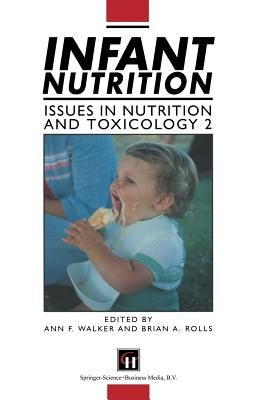
Infant Nutrition
| AUTHOR | Walker, Ann; Rolls, B. A. |
| PUBLISHER | Springer (01/01/1994) |
| PRODUCT TYPE | Paperback (Paperback) |
Description
Few people doubt that the mother's milk provides the best food for the full-terrn infant during the first few months of life, when the digestive, absorptive and excretory systems are relatively immature. The develop- ment of the digestive enzymes is detailed in Chapter 4. The significance of this immaturity first emerged as a consequence of the pioneering work of Professor Robert McCance and Dr Elsie Widdowson in human nutrition, when they studied the electrolyte and nitrogen excretion of babies and young animals. To quote Professor McCance, 'Inefficient though the kidneys were by adult standards, they were capable ofmaintaining homeo- stasis, provided the infant and animals were growing while being fed on food of exactly the right composition - that is, the milk of the mother. ' (Ashwell, 1993). One should not forget that although the mother protects the developing baby against much nutritional abuse, the baby may be still be affected by matemal nutrition, and this is discussed in Chapter 2. The superior qualities of breast milk are still recognized, and research continues to discover yet more factors in breast milk significant to the health of the baby for possible inclusion in formulas. The immature stage of development ofthe baby means that while enough nutrients for optimal growth of all tissues are required, excessive quantities may cause intoxica- tion. Tight specifications are essential, since unlike the adult the newbom depends on a single food.
Show More
Product Format
Product Details
ISBN-13:
9780412591402
ISBN-10:
0412591405
Binding:
Paperback or Softback (Trade Paperback (Us))
Content Language:
English
More Product Details
Page Count:
228
Carton Quantity:
32
Product Dimensions:
6.37 x 0.69 x 9.51 inches
Weight:
0.99 pound(s)
Country of Origin:
US
Subject Information
BISAC Categories
Medical | Pediatrics
Medical | Nutrition
Grade Level:
College Freshman
- College Freshman
Dewey Decimal:
618.92
Descriptions, Reviews, Etc.
jacket back
This is the second book in the series Issues in Nutrition and Toxicology. The aim of the series is to provide succinct information on important and sometimes controversial topics in the areas of food science, nutrition and toxicology. The subject of infant nutrition is of great importance and interest internationally and a full understanding of this area is vital, both in developed and developing nations. The editors of the book have brought together an impressive list of contributors who cover in depth the subjects of nutrition during pregnancy, development of digestive enzymes, energy requirements, disease and allergy, cows' milk and weaning foods. There are also important chapters covering the history of infant nutrition and current patterns of infant feeding practices worldwide. Infant Nutrition will be of great interest and use to nutritionists and dieticians, food scientists and technologists, including personnel within the infant food formulation industry, paediatricians, gastroenterologists and general practitioners.
Show More
publisher marketing
Few people doubt that the mother's milk provides the best food for the full-terrn infant during the first few months of life, when the digestive, absorptive and excretory systems are relatively immature. The develop- ment of the digestive enzymes is detailed in Chapter 4. The significance of this immaturity first emerged as a consequence of the pioneering work of Professor Robert McCance and Dr Elsie Widdowson in human nutrition, when they studied the electrolyte and nitrogen excretion of babies and young animals. To quote Professor McCance, 'Inefficient though the kidneys were by adult standards, they were capable ofmaintaining homeo- stasis, provided the infant and animals were growing while being fed on food of exactly the right composition - that is, the milk of the mother. ' (Ashwell, 1993). One should not forget that although the mother protects the developing baby against much nutritional abuse, the baby may be still be affected by matemal nutrition, and this is discussed in Chapter 2. The superior qualities of breast milk are still recognized, and research continues to discover yet more factors in breast milk significant to the health of the baby for possible inclusion in formulas. The immature stage of development ofthe baby means that while enough nutrients for optimal growth of all tissues are required, excessive quantities may cause intoxica- tion. Tight specifications are essential, since unlike the adult the newbom depends on a single food.
Show More
List Price $54.99
Your Price
$54.44