
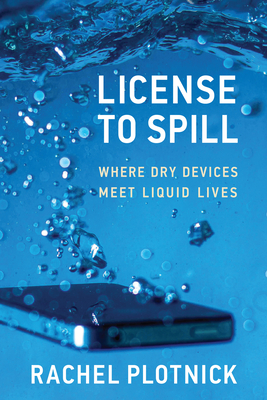
License to Spill: Where Dry Devices Meet Liquid Lives
| AUTHOR | Plotnick, Rachel |
| PUBLISHER | MIT Press (04/29/2025) |
| PRODUCT TYPE | Paperback (Paperback) |
Description
How everyday wetness--from finger smudges, sweat, and spilled drinks to showering and swimming--collides with consumers' media devices designed to stay dry. License to Spill investigates the everyday moments, activities, and spaces where media technologies and liquids collide--from disastrous spilled drinks that corrode laptops and drops in the toilet that drown smartphones to the greasy finger smudges and sweat droplets that sully screens and glitch smartwatches. Putting historical and present-day case studies in conversation, Rachel Plotnick considers how people's experiences with media devices inevitably encounter wetness and yet consumers--not the companies who make the devices--take the blame when leaks, spillages, and overflows occur. Along with thinking about preventive measures and device caretaking, License to Spill examines how water-resistant and waterproofed technologies, through their design and marketing, imagine the brawniest and hardiest of users meant to "punish" and "abuse" their "tough" devices, granting them unfettered permission to get wet. Examining a long history of "torture testing" and hyperbolic claims of imperviousness, the book demonstrates how protective designs relate to broader cultural ideas about media use as sporty, luxurious, excessive, or messy. This context is especially relevant given that the market for water-resistant bags, cases, coatings, and seals has flourished over the past decade, with new rhetoric about wetness as "natural" and digital technologies as ever-present. The book pushes us to attend to both the ideals and problems that arise when designing "resilient" devices, ranging from the "right to repair" movement and lawsuits over ingress protection (IP) ratings to obsolescence culture and work-from-home activities in the wake of the COVID-19 pandemic.
Show More
Product Format
Product Details
ISBN-13:
9780262551588
ISBN-10:
0262551586
Binding:
Paperback or Softback (Trade Paperback (Us))
Content Language:
English
More Product Details
Page Count:
306
Carton Quantity:
20
Feature Codes:
Bibliography,
Index
Country of Origin:
US
Subject Information
BISAC Categories
Technology & Engineering | History
Technology & Engineering | Social Aspects
Technology & Engineering | Electronics - General
Dewey Decimal:
621.381
Library of Congress Control Number:
2024033316
Descriptions, Reviews, Etc.
publisher marketing
How everyday wetness--from finger smudges, sweat, and spilled drinks to showering and swimming--collides with consumers' media devices designed to stay dry. License to Spill investigates the everyday moments, activities, and spaces where media technologies and liquids collide--from disastrous spilled drinks that corrode laptops and drops in the toilet that drown smartphones to the greasy finger smudges and sweat droplets that sully screens and glitch smartwatches. Putting historical and present-day case studies in conversation, Rachel Plotnick considers how people's experiences with media devices inevitably encounter wetness and yet consumers--not the companies who make the devices--take the blame when leaks, spillages, and overflows occur. Along with thinking about preventive measures and device caretaking, License to Spill examines how water-resistant and waterproofed technologies, through their design and marketing, imagine the brawniest and hardiest of users meant to "punish" and "abuse" their "tough" devices, granting them unfettered permission to get wet. Examining a long history of "torture testing" and hyperbolic claims of imperviousness, the book demonstrates how protective designs relate to broader cultural ideas about media use as sporty, luxurious, excessive, or messy. This context is especially relevant given that the market for water-resistant bags, cases, coatings, and seals has flourished over the past decade, with new rhetoric about wetness as "natural" and digital technologies as ever-present. The book pushes us to attend to both the ideals and problems that arise when designing "resilient" devices, ranging from the "right to repair" movement and lawsuits over ingress protection (IP) ratings to obsolescence culture and work-from-home activities in the wake of the COVID-19 pandemic.
Show More
Your Price
$69.30