
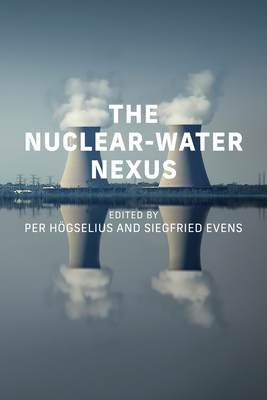
The Nuclear-Water Nexus
| PUBLISHER | MIT Press (07/01/2025) |
| PRODUCT TYPE | Paperback (Paperback) |
Description
An edited collection that takes a deep dive into the complex interactions between nuclear energy and water. Splitting atoms is a water-intensive business. To operate efficiently and safely, a standard nuclear reactor needs around 50 cubic meters (13,000 gallons) of water per second--equivalent to the flow of a mid-sized river or large irrigation canal. In The Nuclear-Water Nexus, Per Högselius and Siegfried Evens bring together 25 authors from 12 countries to explore the resulting entanglements between society, technology, and nature, to show how nuclear energy's dependence on water has shaped the atomic age in decisive ways. Water has been the key factor in forging a global nuclear geography, as the water needs of nuclear facilities require them to be located near the sea, major rivers, canals, or lakes. As an unintended consequence of such locations, nuclear facilities have become vulnerable to droughts, floods, erosion, and climate change--with much higher stakes than most other energy installations. Consequently, the "wet" geography of nuclear energy translates into threats to the wet environment, in the form of both radioactive contamination and thermal pollution. Water has, over the years, generated social conflicts--and cooperation--between nuclear energy and other water-intensive activities, such as agriculture, fisheries, navigation, military activities, hydropower production, drinking water supply, landscaping, leisure and tourism--and even fossil fuel extraction. This book examines these processes through a set of in-depth case studies. Contributors:
Elisabetta Bini, Kate Brown, Peter Burt, Joanna L. Dyl, Siegfried Evens, Carlos Gonzalvo, Elizabeth Hameeteman, Per Högselius, Sonali Huria, Roman Khandozhko, Achim Klu?ppelberg, Maximilian P. Lau, Sabine Loewe-Hannatzsch, Anaël Marrec, Victor McFarland, Jan-Henrik Meyer, Sarah E. Robey, Diego Sesma-Martín, S. Duygu Sever, Kumar Sundaram, Jonathon Turnbull, Thomas Turnbull, Mar Rubio-Varas, Agnès Villette, Heather Williams
Elisabetta Bini, Kate Brown, Peter Burt, Joanna L. Dyl, Siegfried Evens, Carlos Gonzalvo, Elizabeth Hameeteman, Per Högselius, Sonali Huria, Roman Khandozhko, Achim Klu?ppelberg, Maximilian P. Lau, Sabine Loewe-Hannatzsch, Anaël Marrec, Victor McFarland, Jan-Henrik Meyer, Sarah E. Robey, Diego Sesma-Martín, S. Duygu Sever, Kumar Sundaram, Jonathon Turnbull, Thomas Turnbull, Mar Rubio-Varas, Agnès Villette, Heather Williams
Show More
Product Format
Product Details
ISBN-13:
9780262552288
ISBN-10:
0262552280
Binding:
Paperback or Softback (Trade Paperback (Us))
Content Language:
English
More Product Details
Page Count:
416
Carton Quantity:
20
Feature Codes:
Bibliography,
Index
Country of Origin:
US
Subject Information
BISAC Categories
Science | Environmental Science (see also Chemistry - Environmental)
Science | Power Resources - Nuclear
Science | Energy
Dewey Decimal:
363.739
Library of Congress Control Number:
2024030347
Descriptions, Reviews, Etc.
publisher marketing
An edited collection that takes a deep dive into the complex interactions between nuclear energy and water. Splitting atoms is a water-intensive business. To operate efficiently and safely, a standard nuclear reactor needs around 50 cubic meters (13,000 gallons) of water per second--equivalent to the flow of a mid-sized river or large irrigation canal. In The Nuclear-Water Nexus, Per Högselius and Siegfried Evens bring together 25 authors from 12 countries to explore the resulting entanglements between society, technology, and nature, to show how nuclear energy's dependence on water has shaped the atomic age in decisive ways. Water has been the key factor in forging a global nuclear geography, as the water needs of nuclear facilities require them to be located near the sea, major rivers, canals, or lakes. As an unintended consequence of such locations, nuclear facilities have become vulnerable to droughts, floods, erosion, and climate change--with much higher stakes than most other energy installations. Consequently, the "wet" geography of nuclear energy translates into threats to the wet environment, in the form of both radioactive contamination and thermal pollution. Water has, over the years, generated social conflicts--and cooperation--between nuclear energy and other water-intensive activities, such as agriculture, fisheries, navigation, military activities, hydropower production, drinking water supply, landscaping, leisure and tourism--and even fossil fuel extraction. This book examines these processes through a set of in-depth case studies. Contributors:
Elisabetta Bini, Kate Brown, Peter Burt, Joanna L. Dyl, Siegfried Evens, Carlos Gonzalvo, Elizabeth Hameeteman, Per Högselius, Sonali Huria, Roman Khandozhko, Achim Klu?ppelberg, Maximilian P. Lau, Sabine Loewe-Hannatzsch, Anaël Marrec, Victor McFarland, Jan-Henrik Meyer, Sarah E. Robey, Diego Sesma-Martín, S. Duygu Sever, Kumar Sundaram, Jonathon Turnbull, Thomas Turnbull, Mar Rubio-Varas, Agnès Villette, Heather Williams
Elisabetta Bini, Kate Brown, Peter Burt, Joanna L. Dyl, Siegfried Evens, Carlos Gonzalvo, Elizabeth Hameeteman, Per Högselius, Sonali Huria, Roman Khandozhko, Achim Klu?ppelberg, Maximilian P. Lau, Sabine Loewe-Hannatzsch, Anaël Marrec, Victor McFarland, Jan-Henrik Meyer, Sarah E. Robey, Diego Sesma-Martín, S. Duygu Sever, Kumar Sundaram, Jonathon Turnbull, Thomas Turnbull, Mar Rubio-Varas, Agnès Villette, Heather Williams
Show More
Your Price
$64.35