
Back to Search

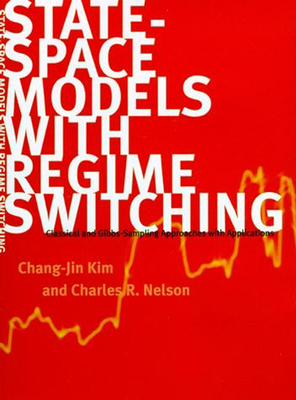
State-Space Models with Regime Switching: Classical and Gibbs-Sampling Approaches with Applications

AUTHOR Nelson, Charles R.; Kim, Chang-Jin; Nelson, Charles R. et al.
PUBLISHER MIT Press (11/03/2017)
PRODUCT TYPE Paperback (Paperback)

Description
Both state-space models and Markov switching models have been highly productive paths for empirical research in macroeconomics and finance. This book presents recent advances in econometric methods that make feasible the estimation of models that have both features. One approach, in the classical framework, approximates the likelihood function; the other, in the Bayesian framework, uses Gibbs-sampling to simulate posterior distributions from data.

The authors present numerous applications of these approaches in detail: decomposition of time series into trend and cycle, a new index of coincident economic indicators, approaches to modeling monetary policy uncertainty, Friedman's "plucking" model of recessions, the detection of turning points in the business cycle and the question of whether booms and recessions are duration-dependent, state-space models with heteroskedastic disturbances, fads and crashes in financial markets, long-run real exchange rates, and mean reversion in asset returns.

Show More
Product Format
Product Details
ISBN-13: 9780262535502
ISBN-10: 0262535505
Binding: Paperback or Softback (Trade Paperback (Us))
Content Language: English
More Product Details
Page Count: 311
Carton Quantity: 26
Product Dimensions: 6.00 x 0.60 x 8.90 inches
Weight: 1.01 pound(s)
Country of Origin: US
Subject Information
BISAC Categories
Business & Economics | Econometrics
Business & Economics | Economics - General
Grade Level: College Freshman and up
Dewey Decimal: 330.015
Descriptions, Reviews, Etc.
publisher marketing
Both state-space models and Markov switching models have been highly productive paths for empirical research in macroeconomics and finance. This book presents recent advances in econometric methods that make feasible the estimation of models that have both features. One approach, in the classical framework, approximates the likelihood function; the other, in the Bayesian framework, uses Gibbs-sampling to simulate posterior distributions from data.

The authors present numerous applications of these approaches in detail: decomposition of time series into trend and cycle, a new index of coincident economic indicators, approaches to modeling monetary policy uncertainty, Friedman's "plucking" model of recessions, the detection of turning points in the business cycle and the question of whether booms and recessions are duration-dependent, state-space models with heteroskedastic disturbances, fads and crashes in financial markets, long-run real exchange rates, and mean reversion in asset returns.

Show More
Your Price  $69.30
Paperback