
Available options are listed below:
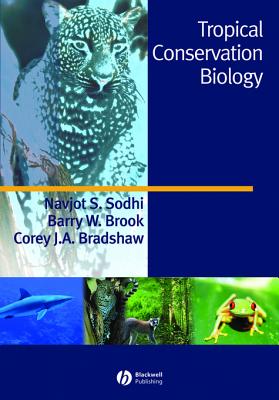
Tropical Conservation Biology
| AUTHOR | Bradshaw, Corey J. a.; Brook, Barry W.; Sodhi, Navjot S. |
| PUBLISHER | Wiley-Blackwell (05/22/2013) |
| PRODUCT TYPE | eBook (Open Ebook) |
- Includes case studies and interviews with prominent conservation scientists to help situate key concepts in a real world context
- Covers a broad range of topics including: the fate of the coral reefs; the impact of agriculture, urbanization, and logging on habitat depletion; and the effects of fire on plants and animal survival
- Highlights conservation successes in the region, and emphasizes the need to integrate social issues, such as human hunger, into a tangible conservation plan
- Documents the current state of the field as it looks for ways to predict future outcomes and lessen human impact
"Sodhi et al. have done a masterful job of compiling a great deal of literature from around the tropical realm, and they have laid out the book in a fruitful and straightforward manner...I plan to use it as a reference and as supplemental reading for several courses and I would encourage others to do the same." Ecology, 90(4), 2009, pp. 1144-1145
Tropical Conservation Biology is the first teaching textbook to examine the broad spectrum of conservation issues as they relate specifically to terrestrial and aquatic habitats of the tropics. The book has been written for senior undergraduate and graduate students, scientists, and managers with an interest in tropical habitat conservation and management.
The book also includes short biographies of some of the world's most eminent conservation scientists followed by a brief set of questions and answers that focus on some of the most pertinent and pressing issues in tropical conservation biology today. It is hoped that current students will benefit from the knowledge and be inspired by the passion of these renowned biologists.
Tropical Conservation Biology is the first teaching textbook to examine the broad spectrum of conservation issues as they relate specifically to terrestrial and aquatic habitats of the tropics.
- Presents case studies and interviews with prominent conservation scientists to help situate key concepts in a real world context
- Includes short biographies of some of the world's most eminent conservation scientists followed by a brief set of questions and answers that focus on some of the most pertinent and pressing issues in tropical conservation biology today. It is hoped that current students will benefit from the knowledge and be inspired by the passion of these renowned biologists.
- Covers a broad range of topics including: the fate of the coral reefs; the impact of agriculture, urbanization, and logging on habitat depletion; and the effects of fire on plants and animal survival
- Highlights conservation successes in the region, and emphasizes the need to integrate social issues, such as human hunger, into a tangible conservation plan
- Documents the current state of the field as it looks for ways to predict future outcomes and lessen human impact
Tropical Conservation Biology is an essential resource for senior undergraduate and graduate students, scientists and managers with an interest in tropical habitat conservation and management.
- Includes case studies and interviews with prominent conservation scientists to help situate key concepts in a real world context
- Covers a broad range of topics including: the fate of the coral reefs; the impact of agriculture, urbanization, and logging on habitat depletion; and the effects of fire on plants and animal survival
- Highlights conservation successes in the region, and emphasizes the need to integrate social issues, such as human hunger, into a tangible conservation plan
- Documents the current state of the field as it looks for ways to predict future outcomes and lessen human impact
"Sodhi et al. have done a masterful job of compiling a great deal of literature from around the tropical realm, and they have laid out the book in a fruitful and straightforward manner...I plan to use it as a reference and as supplemental reading for several courses and I would encourage others to do the same." Ecology, 90(4), 2009, pp. 1144-1145