
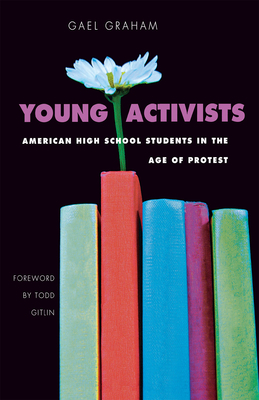
Young Activists
| AUTHOR | Graham, D. Kurt; Graham, Gael; Graham, Gael et al. |
| PUBLISHER | Northern Illinois University Press (02/06/2006) |
| PRODUCT TYPE | Hardcover (Hardcover) |
The traumas and controversies of the 1960s--the civil rights movement, the Vietnam War, and the pervasive antiauthoritarian spirit so evident on college campuses--infiltrated American public high schools. Students challenging their relegation to the world of children demanded the right to express their political views and to have a voice in decisions about their education. Adopting the activist tactics of the times, they organized strikes and demonstrations, initiated petitions and boycotts, and sought recourse through lawsuits and occasional violence.
As racial tensions flared across the country, high schools became a crucial arena for the civil rights movement. Drawing upon the memories of students and teachers as well as education journals, court cases, and news magazines, Young Activists provides an insider s look at desegregation in all regions of the country, with a candid discussion of Black and Brown Power militancy and the reaction of white students. Debates about the war in Vietnam also rattled the high schools as young men and women--potential draftees and their colleagues--clashed over their judgments of American policy. In addition to these large social issues, student activists had their own specific agendas: relaxing dress codes, taking part in school governance, and initiating changes to the curriculum. School authorities responded, warily but often positively. By the time activism waned in the mid-1970s, students had succeeded in making their high schools more open, more democratic, and more in tune with the times. Graham demonstrates that, although teenagers were indisputably influenced by the events reshaping the wider world, they were neither pawns nor mere mimics of their elders. Rather, they drew upon the rhetoric and strategies available to them in the 1960s to promote their own interests.The traumas and controversies of the 1960s--the civil rights movement, the Vietnam War, and the pervasive antiauthoritarian spirit so evident on college campuses--infiltrated American public high schools. Students challenging their relegation to the world of children demanded the right to express their political views and to have a voice in decisions about their education. Adopting the activist tactics of the times, they organized strikes and demonstrations, initiated petitions and boycotts, and sought recourse through lawsuits and occasional violence.
As racial tensions flared across the country, high schools became a crucial arena for the civil rights movement. Drawing upon the memories of students and teachers as well as education journals, court cases, and news magazines, Young Activists provides an insider s look at desegregation in all regions of the country, with a candid discussion of Black and Brown Power militancy and the reaction of white students. Debates about the war in Vietnam also rattled the high schools as young men and women--potential draftees and their colleagues--clashed over their judgments of American policy. In addition to these large social issues, student activists had their own specific agendas: relaxing dress codes, taking part in school governance, and initiating changes to the curriculum. School authorities responded, warily but often positively. By the time activism waned in the mid-1970s, students had succeeded in making their high schools more open, more democratic, and more in tune with the times. Graham demonstrates that, although teenagers were indisputably influenced by the events reshaping the wider world, they were neither pawns nor mere mimics of their elders. Rather, they drew upon the rhetoric and strategies available to them in the 1960s to promote their own interests.